How Shoes Wear Out, and What the Wear Pattern Tells You
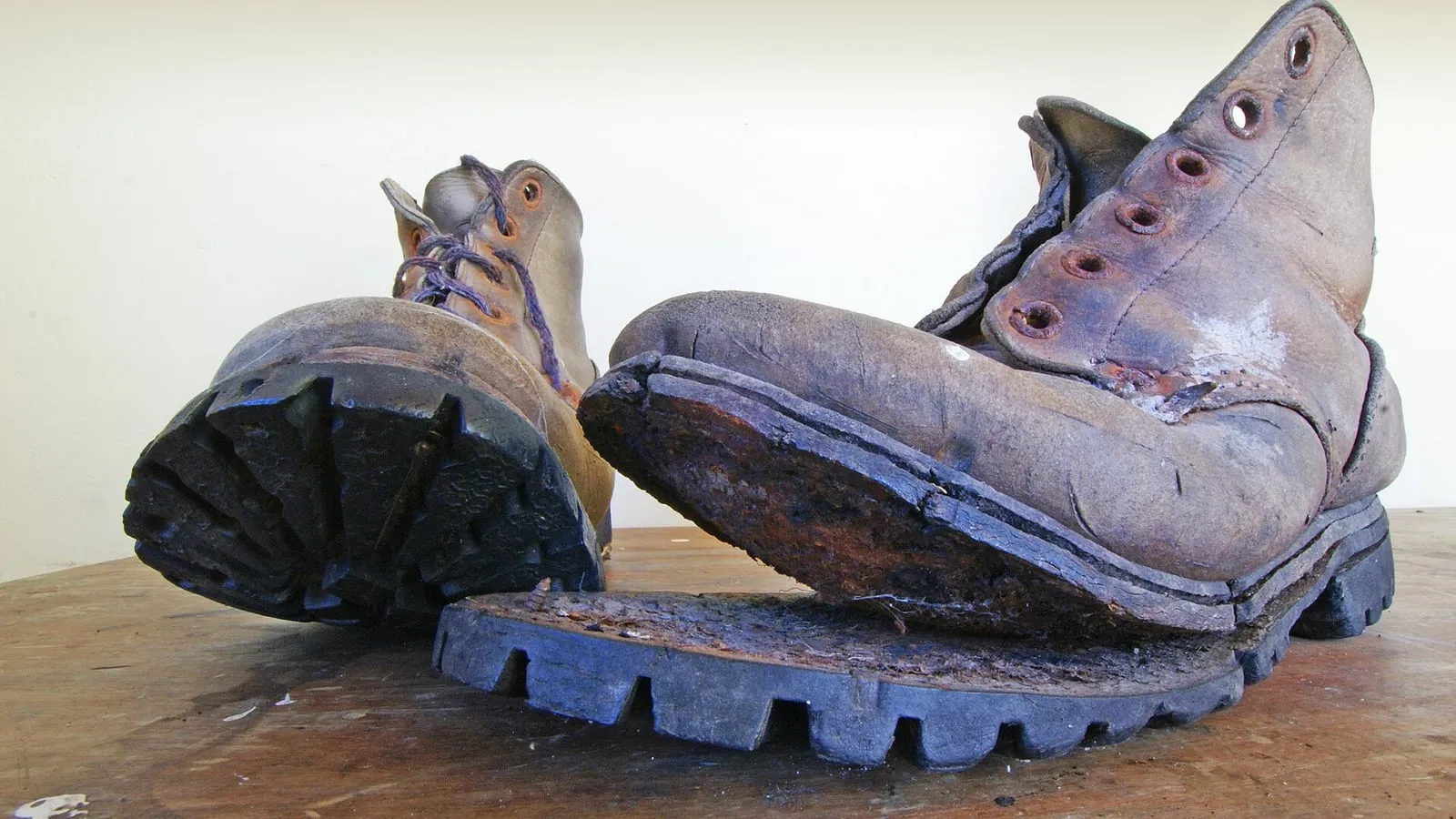
Shoes wear out in ways that record how you walk and how well the shoe suited you. The worn patch on the sole, the flat spot in the cushioning and the crease across the toes are not random damage; they are the result of thousands of repeated loads, and they can tell you a good deal about both your gait and the shoe.
This article explains what the common wear patterns mean, which kinds of wear can be repaired, and which signal that the structure of the shoe has reached its end. It is written so that you can look at a pair you already own and read the story in it.
Wear is a record of your gait
Every step loads a shoe at roughly the same points. Over time, those points wear more than the rest, which is why a pair of shoes can look almost new in one area and ruined in another. Because the pattern is consistent, it reflects the shape of your foot and the way you place it down.
Two people of the same size can wear through the same model in completely different places. Neither pattern is automatically a fault. What matters is whether the shoe wears in a way that suits you, or whether it fights you and fails early as a result.
Outsole wear patterns
Look at the bottom of an old pair and compare the two shoes with each other.
- Wear at the outer edge of the heel. Very common, and usually the first place to show, because the heel takes the load as the foot lands. Slight outer-heel wear is normal.
- Heavy wear on the inner side of the heel and the inner ball. Suggests the foot rolls inward noticeably as it moves. It can wear the inner side of the sole far faster and is often linked to shoes that feel unsupportive.
- Heavy wear on the outer ball and outer heel together. Suggests the foot rolls outward, which stresses the outside of the shoe and can wear through the upper near the little toe.
- A concentration at the ball under the big toe. Suggests the foot pushes off strongly there, and often produces a hole below the toe rather than at the edge.
- Wear right across, evenly. Usually the sign of a hard, flat, well-balanced gait, and the slowest pattern to destroy a sole.
- One shoe more than the other. Common, and usually reflects a difference in leg length, old injury or habit. It is worth noticing, because a shoe worn on the worse side may need replacing sooner.
Outsole wear is the easiest to repair, because a cobbler can add a new sole or a protective plate before the damage reaches deeper.
Midsole collapse
On trainers, and on any shoe with a foam midsole, the visible outsole can look fine while the shoe is finished. Foam loses its ability to spring back through repeated compression, and after enough miles the midsole takes a permanent set.
The signs are a shoe that no longer feels as cushioned as it did, a sole that has developed a crease or ripple along the side, and a visible lean when you look at the shoe from behind and the foam is compressed more on one side than the other. On many trainers the midsole is the part that limits the shoe’s life, not the outsole, and it is not something a cobbler can replace.
Creasing in the upper
The upper creases where it flexes, usually just behind the toes. Leather develops fine, soft creases that look natural and are a sign the material is moulding to the foot. Coated and synthetic materials tend to form sharper folds, and the coating can crack along them.
Creasing in the wrong place is more telling than creasing itself. If the sharpest fold sits across the middle of the foot rather than the ball, the shoe is flexing behind the joint, which usually means the length or the last shape is wrong. That fold will rub the top of the foot and the material will fail there first.
Creases that have become deep cracks, especially on coated leather, cannot be repaired. They are a sign the upper is on its way out.
Heel lining and collar
The lining at the heel is one of the first things to fail, because it rubs with every step. It wears through, then the stiff heel counter behind it is exposed and begins to rub the skin. This happens sooner in shoes that slip at the heel, which is often a sign the fit is loose rather than the lining being weak.
A worn heel lining is a common and inexpensive repair: a cobbler can replace the panel or add a patch inside the heel. Catching it before the skin is rubbed raw is worth doing.
What can be repaired
Repairs are usually viable when the failure is in a replaceable component and the upper is sound.
- Outsole wear: resoled, or protected earlier with a thin plate.
- Worn heel: replaced, since most heels are designed to be.
- Heel lining: patched or replaced.
- Loose stitching or a small split: restitched, if the material around it is strong.
- Worn insole: replaced, where it is removable.
What cannot
Some failures end a shoe, and spending on them is rarely wise.
- A collapsed or cracked midsole on a moulded trainer, which cannot be separated from the upper.
- A cracked or torn upper, especially where the crack runs across the flexing area.
- A cemented sole that has already been replaced once or twice and is now coming away along the bond.
- A last that has lost its shape because the shoe was repeatedly soaked and dried in the wrong way.
In each of these cases the repair would cost more, or last less, than the shoe is worth, and the money is better put towards a replacement.
Reading a pair before you buy the next
The most useful thing about wear patterns is what they tell you to look for next time. If your last pair collapsed on the inner side and you roll inward, look for a shoe with a firmer heel and a straighter last. If they creased across the middle, look for a longer or differently shaped last. If the outsole died long before the upper, look for a stitched shoe that can be resoled.
A worn-out pair is the cheapest fitting advice you will ever get, provided you look at it before you throw it away.