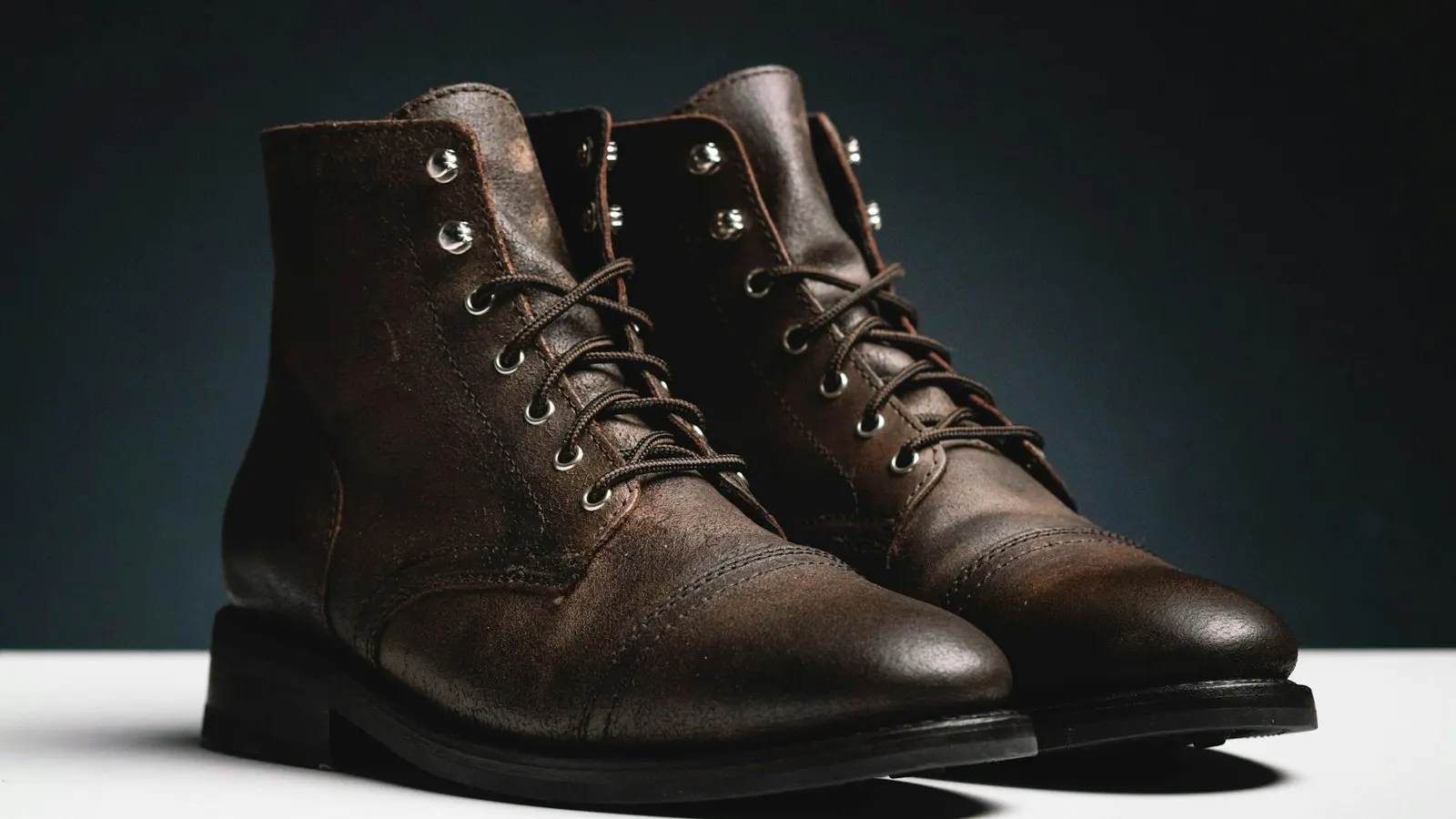
How to Fit Knee-High and Sock Boots
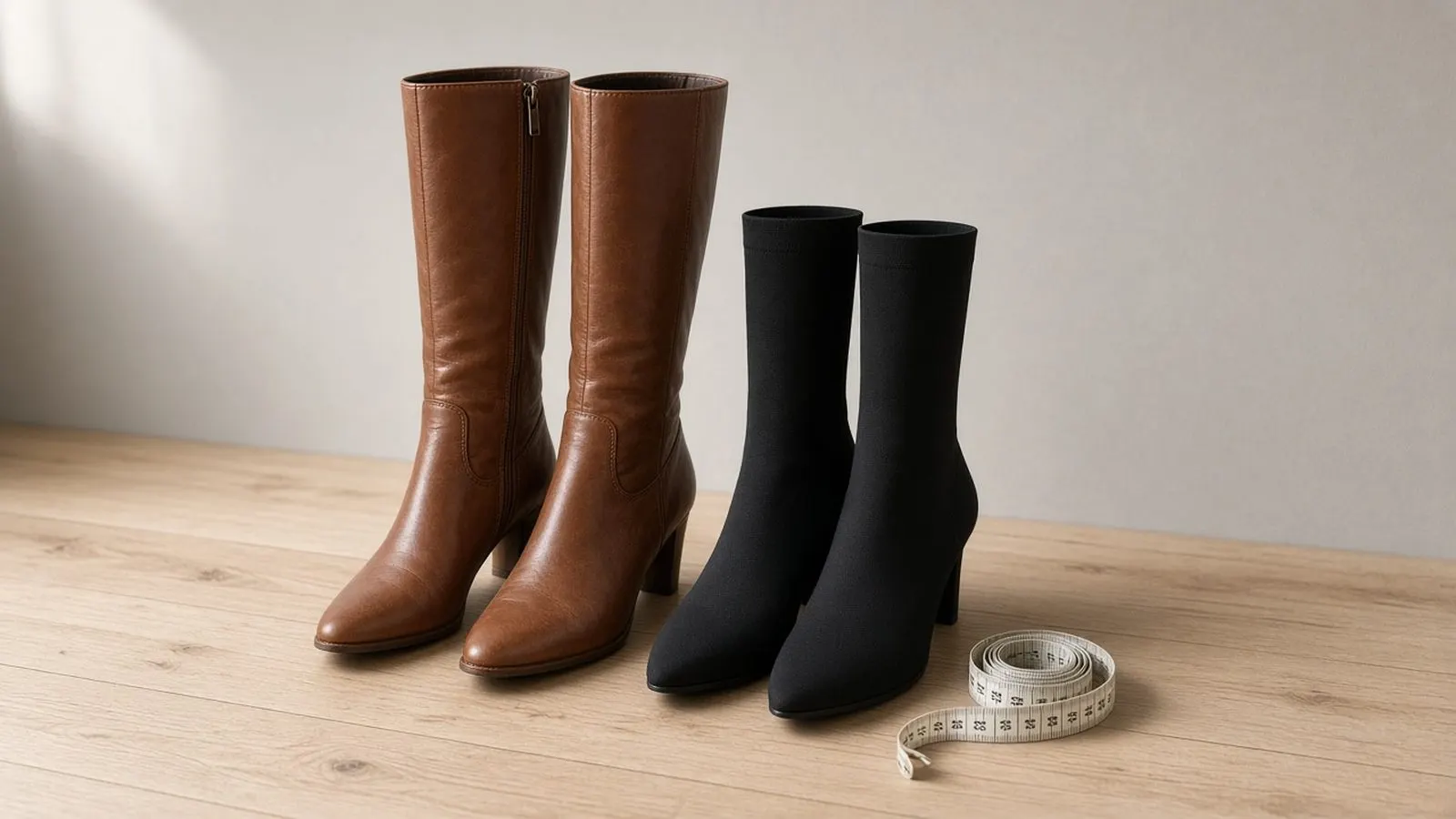
Most tall-boot failures start at the till, not on the street. A boot bought tight at the calf and then forced is the classic case. Zippers split at the top. Elastic gussets go baggy. Leather creases in a ring around the ankle because the foot sat too far forward.
Tall boots are back in a big way this fall, which means a lot of people are about to buy them online. Vogue’s October 19 boot roundup leads with the slim knee-high, “upgraded with a wicked heel, a structured shape, and extra hardware,” plus buckle boots from Dries Van Noten and Dior and second-skin sock boots seen at Celine, Chanel and Calvin Klein. WWD’s fall list adds utilitarian riding boots from Hermès, Proenza Schouler and Tory Burch, moto boots, and sock boots that fit closer to the leg. The colors to expect, per WWD: olive at Tibi, Joseph and Acne Studios, alongside the burgundy and chocolate brown of recent seasons, plus snakeskin and croc-embossed finishes.
All of that is styling. Fit is three measurements and a little honesty about what leather can and can’t do.
Step 1: Measure your calf, in the afternoon
Wrap a soft tape around the widest part of your calf while standing, with your weight on both feet. Write it down. Then do it again with the sock or tights you’ll actually wear, because a thick sock can change the number noticeably.
Do this later in the day. Legs and feet swell a bit after hours upright, and a boot that only fits your morning calf will feel like a tourniquet at dinner.
Now find the brand’s shaft circumference. Good retailers list it, often measured at the widest point of the shaft. The boot should be roughly equal to your calf plus a little room for movement. If the listing doesn’t give a shaft circumference, I’d treat that as a reason to buy somewhere else.
For sock boots, flip the rule. They’re designed to fit closely. WWD describes the current versions at Celine and Miu Miu as “supple, second-skin boots that fit closer to the leg.” A sock boot that has room to spare will wrinkle and slide down. You want it snug with stretch, not loose.
Step 2: Check shaft height against your knee
Sit on a chair with your knee bent at a right angle. Measure from the floor to the back of your knee. That’s your ceiling.
A knee-high shaft that comes right up into the back of the knee will dig in every time you sit or climb stairs. Remember that the heel adds height to the boot, not to your leg, so a boot with a taller heel sits the shaft higher on you. Look for the shaft height measurement in the listing, and check whether the brand measures it from the floor or from the top of the sole. They don’t all do it the same way.
Step 3: The instep, which most people skip
The most common mistake is the opposite. People spend all their attention on the calf and never think about the top of the foot.
On a pull-on boot or a sock boot with no zipper, your foot has to get past the instep and the ankle on the way in. If you have a high instep, you can have a perfect calf fit and still be unable to get the boot on. Look for a full-length or half-length zipper, or for a stretch panel at the ankle.
Once the boot is on, stand and roll forward onto your toes. Your heel should lift a little and come back down. A lot of heel lift means the boot is too long. No lift and pressure across the top of your foot means the instep is too low for you, and no amount of wearing it in will fix that.
What stretches and what doesn’t
Smooth leather shafts will give a little around the calf with wear and a professional stretcher. Not a lot. Don’t buy a calf that’s tight by more than a small margin and expect it to come right.
Embossed leathers are less forgiving. A croc or snake emboss is pressed into the surface, and the leather underneath is often stiffer and finished more heavily. Stretch it hard and the pattern can distort or crack. If you’re buying one of the reptile-effect boots from this season, like the Marc Fisher Itzia snake boot (listed at $84.20 on Amazon in WWD’s edit, Oct 2026), buy it to fit as it is.
Suede gives more than smooth leather, which is why slouchy suede, like the Steve Madden Lennox at $169.95 per WWD, is the easiest tall boot to fit. Elastic gussets and stretch panels never come back once they’ve gone baggy, so they should feel firm on day one.
Prices from this season’s edits
For reference, here’s the spread in the October roundups. Vogue’s slim knee-highs ran from the Staud Wally at $550 (Shopbop) to the Gucci Donna at $2,300. Its sock-boot picks included the Stuart Weitzman Stassi at $850 and the Simkhai Joni at $995. In WWD’s list, the Sézane Bridget riding boot was $345 and the M.Gemi Una sock bootie $448 (all prices as listed in those edits, Oct 2026).
My opinion, as someone who cares more about seams than labels: at any of those prices, a boot with a full-length zipper and a published shaft circumference is a better buy than a prettier one without. You can resole a good tall boot. You can’t add room to a calf that was never there.
If you’re ordering online, read our guide to buying shoes online without the returns cycle first, and our breakdown of how a shoe should fit at the toe, heel and instep for the foot itself.
FAQ
Can a cobbler stretch a knee-high boot at the calf? Usually a little, on smooth or suede leather. Embossed finishes and boots with lots of hardware are riskier. A stretch won’t rescue a boot that’s far too small.
Should sock boots be tight? Snug, yes. They’re meant to sit close to the leg. Loose sock boots wrinkle at the ankle and slip down as you walk.
Why does the top of my knee-high boot dig in when I sit? The shaft is too tall for your leg once the heel lifts it. Measure floor to the back of the knee while seated and keep the shaft below that.